In the past, financial literacy meant knowing how to write a cheque, track household expenses in a ledger, or understand interest rates. Today, it means spotting a phishing scam in your inbox, setting spending limits on a banking app, or questioning whether the AI tool recommending your investment portfolio understands your actual needs.
In an economy where financial transactions have become invisible, seamless, and increasingly automated, digital financial literacy is not just a desirable skill — it is a civic necessity.
And yet, the data tells a sobering story. According to the 2023 OECD Financial Literacy Report, Maltese youth scored below the EU average in key areas of digital financial capability. This includes understanding digital payments, recognising online fraud, comparing products using online tools, and being aware of the risks of financial data sharing.
This gap isn’t just a tech issue — it’s a trust and empowerment issue. In a society where bank branches are closing and services are migrating online, those without digital confidence are being left behind. It’s not a question of access; it’s a question of understanding and bridging that communication gap.
So what can be done?
In schools, teachers can embed digital finance into existing subjects — by using mobile apps in maths to simulate real-life budgeting, introducing discussions around online advertising and “buy now, pay later” schemes in PSCD classes, or building financial scenarios into digital literacy lessons.
In banks and fintech companies, designers can implement subtle behavioural nudges — defaults that promote saving, alerts that highlight excessive spending, or visualisations that help users understand debt and interest in more intuitive ways.
In policymaking, digital finance must be framed as a component of social inclusion. It’s no longer sufficient to teach people what money is — we must teach them how money works in a digital system, including the biases built into algorithms and platforms.
To borrow a phrase from the education sector: digital financial literacy is the new reading, writing, and arithmetic. Without it, individuals are ill-equipped to navigate modern life — from applying for loans to protecting their data or understanding the implications of digital currencies like the coming Digital Euro.
Malta has a unique opportunity to lead by embedding digital financial literacy at every level — from classroom to boardroom. But it requires collaboration between the various ministries, schools, financial institutions, and digital innovators.
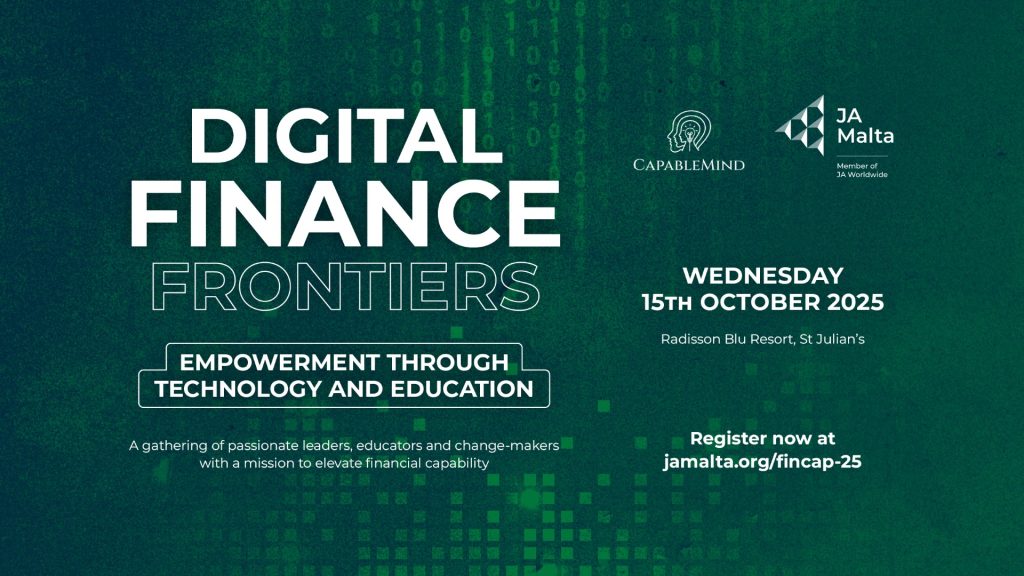
This year’s Digital Finance Frontiers conference is not just about awareness. It’s about action. It’s about asking: Are we preparing the Maltese community, especially the younger generation, to be safe, critical thinkers in a digital financial world? Because without digital financial literacy, the promise of inclusion becomes a new kind of exclusion — silent, systemic, and dangerously easy to ignore.